

When Trusted Equipment Comes Under Review
When Trusted Equipment Comes Under Review
In most labs, certain pieces of equipment fade into the background.
They’re switched on every morning, trusted without question, and rarely discussed unless something goes wrong. Over time, they stop feeling like products at all and start feeling like part of the environment, just another fixture of how work gets done.
That’s usually fine.
Until someone asks a question no one expected.
The Assumption No One Realizes They’re Making
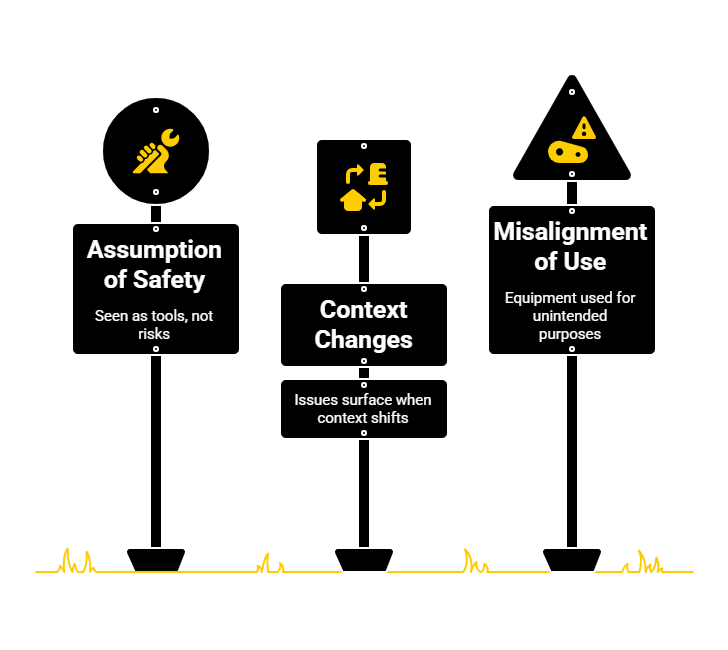
Measurement, control, and laboratory equipment often sit in a category of their own. They’re seen as tools rather than products, instruments rather than sources of risk. They’re operated by trained professionals, used in familiar spaces, and relied on to validate other equipment.
That quiet trust shapes decisions and it’s also where blind spots form.
Because in regulatory terms, these devices are still electrical and electronic products. They carry energy, connect to other systems, operate continuously, and interact with environments that are rarely as controlled as people assume.
The difference isn’t risk.
It’s how visible that risk feels.
Where Things Start to Unravel
Issues rarely surface during everyday use. They appear when context changes.
A lab instrument is moved from R&D into production. A bench-top device becomes permanently installed. A standalone tester is integrated into a larger system. A facility is audited or inspected.
That’s when the focus shifts, not to what the equipment is testing, but to the equipment itself.
And that’s when assumptions get tested.
Why These Products Are Evaluated the Way They Are
Laboratory, measurement, and control equipment are governed by the IEC 61010 series of standards, which apply specifically to products used in laboratory and industrial environments.
IEC 61010 isn’t theoretical, it exists because of how these devices are used.
While these instruments typically don’t interact directly with patients or end users, they still present risks to:
- laboratory personnel standing beside them,
- other equipment operating nearby, and
- the facilities housing them.
The IEC 61010 series addresses hazards ranging from electrical shock and fire to mechanical stress, energy storage, moving parts, heat, and operator access.
Compliance focuses on requirements such as insulation, grounding, protective measures, and preventing electrical, fire, shock, and mechanical hazards.
The Mistake That Keeps Repeating
One of the most common issues we see isn’t outright non-compliance, it’s misalignment.
Equipment designed for one type of use gradually ends up doing something else. A device intended for occasional testing becomes a permanent production tool. An instrument designed as standalone equipment becomes part of a system.
Nothing about the product changes.
Everything about its role does.
And that shift matters.
Where LabTest Fits In
At LabTest Certification, we work with manufacturers of measurement, control, and laboratory equipment at exactly these transition points.
Our role is to evaluate if the equipment complies with the applicable safety and performance standards, or its specific application and to help determine what safety and EMC considerations apply in its current context. That may involve testing, evaluation, or clarifying when existing evidence remains valid and when it no longer reflects reality.
Often, the most valuable outcome isn’t a report.
It’s the certainty that the product meets the requirements.
Knowing where a product stands before it’s questioned keeps projects moving and avoids uncomfortable surprises during audits and inspections.
The Key Takeaway
Test equipment doesn’t become problematic because it was poorly designed. It becomes problematic when assumptions go unexamined.
The same mindset that demands evidence from other products eventually turns inward, and when it does, preparation matters.
Because even the tools we trust the most don’t get a free pass.