

A product can perform exactly as intended and still fail EMC compliance.
For many engineering teams, that comes as a surprise.
The prototype powers on, every feature works, performance targets are met, and months of development have gone according to plan. Yet when the product reaches formal EMC testing, unexpected electromagnetic emissions or susceptibility issues can bring the project to a halt.
The problem isn’t usually functionality.
It’s electromagnetic compatibility.
Why EMC Issues Often Go Undetected
Unlike mechanical or functional defects, EMC problems are often invisible during day-to-day development.
A product may appear to operate flawlessly while quietly emitting electromagnetic interference that exceeds regulatory limits, or it may be vulnerable to interference from other electronic equipment.
These issues are typically related to factors such as:
- PCB layout
- Grounding strategies
- Cable routing
- Shielding effectiveness
- Power supply design
- Filtering techniques
Many of these factors cannot be fully evaluated by functional testing alone. They only become apparent when the product is assessed in a controlled EMC environment.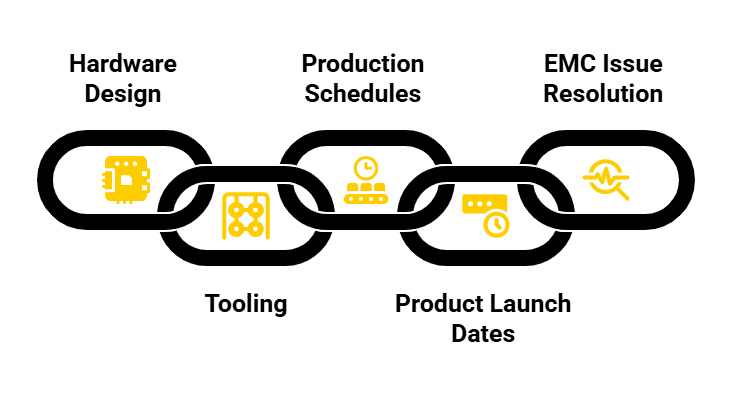
The Cost of Waiting Until Certification
For many manufacturers, formal EMC compliance testing is scheduled near the end of product development.
At that stage:
- Hardware designs are largely finalized.
- Tooling may already be complete.
- Production schedules have been established.
- Product launch dates have been announced.
If an EMC issue is discovered during formal testing, resolving it can require redesign work, additional engineering time, repeat testing, and changes to project schedules.
The later an EMC issue is identified, the more expensive it often becomes to correct.
That’s Where EMC Prescans Make a Difference
An EMC prescan is a pre-compliance test used to measure a product’s EMC performance before formal compliance testing.
Rather than determining certification, the objective is to identify potential electromagnetic compatibility issues while design changes are still practical.
Prescans allow engineering teams to:
- Detect potential emissions concerns early
- Evaluate shielding, grounding, cable routing, and filtering improvements
- Validate design changes during development
- Reduce the likelihood of unexpected failures during formal compliance testing
- Improve confidence before entering certification
Many teams also use engineering prototypes or pre-production units for prescan testing, making it possible to refine a design before it reaches its final configuration.
A Collaborative Engineering Process
One of the biggest advantages of EMC prescan testing is flexibility.
Unlike formal certification testing, engineers can often investigate potential issues, evaluate modifications, and observe how design changes affect EMC performance during the session.
Small adjustments such as modifying cable routing, improving grounding, changing shielding, or adding filtering can often be assessed before moving forward with the next stage of development.
Who Benefits From EMC Prescans?
EMC prescans support organizations developing products such as:
- Consumer electronics
- Industrial equipment
- Medical devices
- Telecommunications equipment
- Information technology equipment
- Automotive electronics
- IoT and connected devices
- Commercial electronic products
Any product that must demonstrate electromagnetic compatibility before entering regulated markets can benefit from early EMC evaluation.
How LabTest Supports Your Project
LabTest currently has EMC prescan availability and is accepting new bookings.
Our engineers work closely with manufacturers, developers, and engineering teams to help identify potential EMC concerns before formal compliance testing begins. Whether you’re evaluating a new design, troubleshooting unexpected emissions, or preparing for certification, we can help determine an appropriate testing strategy for your project.
If you’re planning EMC testing in the coming weeks, scheduling a prescan now can help keep your development timeline moving while providing valuable engineering insight before formal compliance testing.
Because the best time to find an EMC issue is before certification finds it.